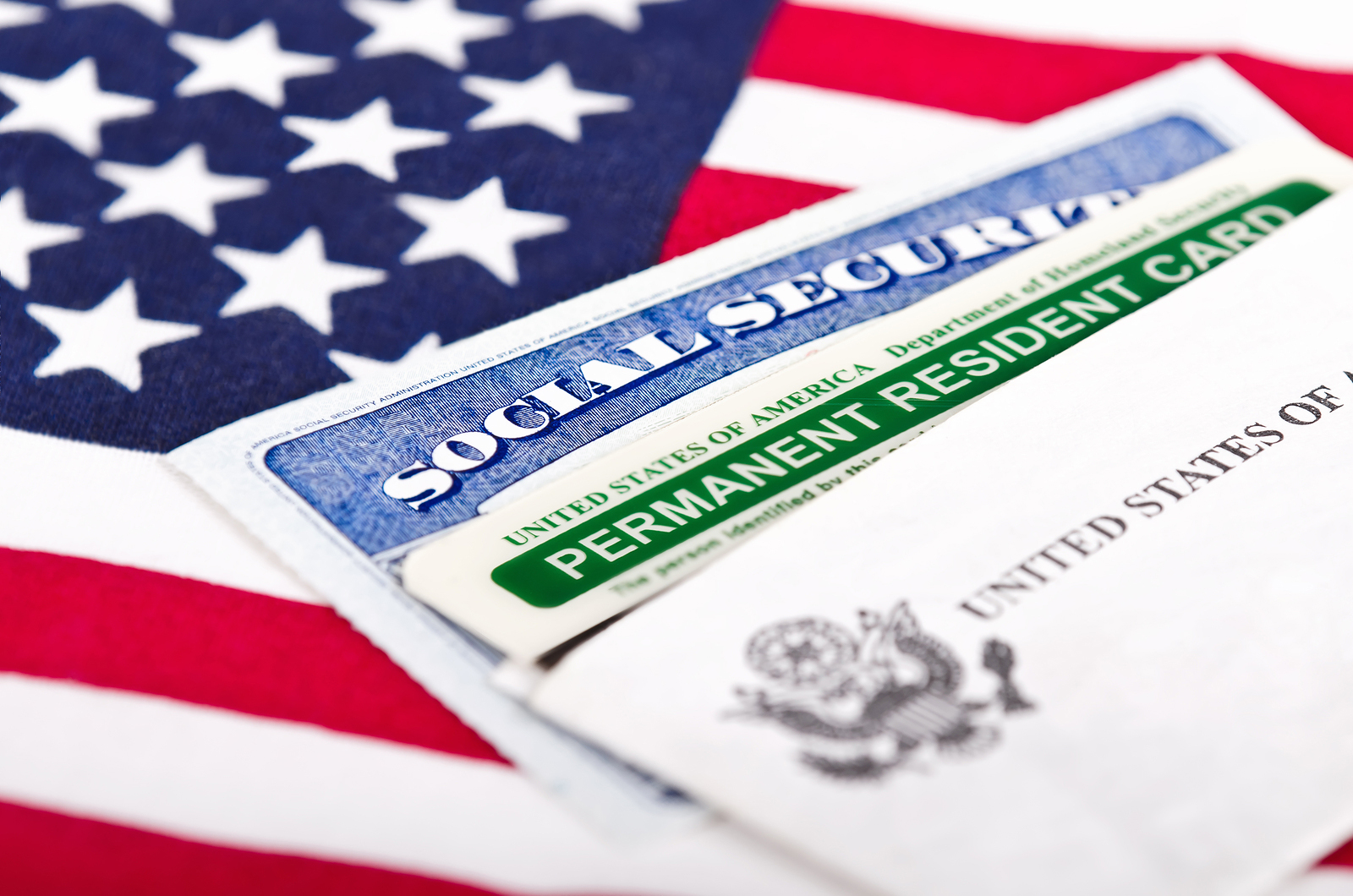
A U.S. green card is evidence of lawful permanent resident status. It allows an eligible person to live and work permanently in the United States, subject to the rights, responsibilities, and conditions established by immigration law. Getting a green card is not one single application: the available route depends on the applicant’s family relationships, employment, immigration history, location, and other eligibility factors.
This overview explains the general process. Immigration consequences can be serious, and forms, filing fees, visa availability, and procedures can change. Verify every requirement on official government websites or consult a qualified immigration attorney or accredited representative for advice about a specific case.
1. Identify a lawful eligibility category
Common categories include certain family relationships with U.S. citizens or lawful permanent residents, qualifying employment-based routes, refugee or asylee adjustment, and other categories created by law. Each category has its own definitions and evidence requirements. A person cannot obtain permanent residence merely because they want to move to the United States or have lived there for a certain period.
In family-based cases, the relationship and the petitioner’s status matter; different family categories have different rules and visa availability. In employment-based cases, the type of job, employer, qualifications, and sometimes a labor-certification process can be relevant. Humanitarian and special statutory categories have separate requirements. Review the official USCIS Green Card resource to identify categories and current instructions.
2. Determine whether a petition is required
Many family and employment routes begin with a petition filed by a qualifying relative or employer. For example, a U.S. citizen or lawful permanent resident may file a family petition where permitted, and an employer may file an employment petition where eligible. Other categories can have different petitioners, self-petition options, or procedures. Petition approval does not always mean that a visa is immediately available or that the applicant has already become a permanent resident.
The U.S. Department of State explains how to submit an immigrant-visa petition and what role USCIS plays. Always use the instructions for your specific category and current form edition.
3. Check visa availability and timing
Some immigrant categories have annual numerical limits or waiting lists. The priority date, preference category, country of chargeability, and current Visa Bulletin may affect when an applicant can take the next step. Immediate-relative cases involving U.S. citizens are treated differently from many family-preference categories, but eligibility still must be established and other requirements still apply.
Processing times vary by form, category, government workload, applicant circumstances, and consular post. Online estimates are not guarantees. Do not make non-refundable travel, housing, or employment decisions based solely on a petition receipt or estimated processing date.
4. Adjustment of status or consular processing
Some eligible applicants already in the United States may be able to apply for adjustment of status through USCIS. Others complete immigrant-visa processing through the Department of State and attend an interview at a U.S. embassy or consulate before traveling on an immigrant visa. Which procedure is available depends on the category, location, admissibility, status history, and other legal factors.
Do not assume that entering the country with a temporary visa automatically permits adjustment, or that every applicant outside the United States can use the same consular steps. Unlawful presence, prior removal, misrepresentation, criminal history, certain medical issues, and other factors may affect eligibility or require specialist legal advice.
5. Prepare documents carefully
Requirements vary, but an application may involve identity documents, birth and marriage records, evidence of a qualifying relationship or employment, financial sponsorship forms, translations, medical examination records, police certificates, and other evidence. Follow the current checklist for the exact category and filing location. Submit accurate copies and required originals; do not alter documents or guess at answers.
Keep a complete copy of every form and supporting document, the payment confirmation, delivery tracking, and all government notices. If facts change—such as a marriage, address, job, or family situation—check whether and how the change must be reported.
6. Biometrics, interview, and decision
Depending on the route, an applicant may need to provide biometrics, attend an interview, complete a medical examination, respond to a request for evidence, or undergo additional review. Answer questions truthfully and bring the documents listed in the official notice. A request for more evidence is not automatically a denial, but missing a deadline can harm the application.
If the application is denied, the notice should explain the decision and any available review or appeal options, which vary by form and category. Seek qualified advice quickly if a deadline applies.
Avoid immigration fraud
Use official USCIS and Department of State websites for forms, fees, and case status. A notary or “consultant” is not automatically authorized to give U.S. immigration legal advice. Be skeptical of guarantees, fake government emails, requests for payment through gift cards, and claims that someone can sell a visa number or speed up a case through personal connections. Government fees and payment methods should be verified on the official form page.
A petition is not the same as a green card
One frequent source of confusion is the difference between an approved petition and permanent-resident status. A petition generally asks the government to recognize a qualifying relationship or basis for immigration. Approval may allow a case to move forward, but further steps may remain, including waiting for a visa number, submitting a separate application, proving admissibility, attending an interview, or completing consular processing. Do not treat a receipt notice or petition approval as permission to live or work permanently.
Read every government notice and identify what it actually approves, what it asks you to do next, and the deadline. Keep a tracking list of form numbers, receipt numbers, dates, fees, and addresses. If more than one family member is included, check whether each person needs a separate form, fee, medical examination, or document. Small administrative mistakes can create delays and are easier to prevent with an organized file.
Understand sponsorship and financial evidence
Some family-based cases require a financial sponsor to submit an affidavit of support or other required financial evidence. Requirements, forms, household-size calculations, income thresholds, joint sponsors, and supporting tax documents depend on the case and current instructions. Do not assume that a relative’s willingness to help is enough; the sponsor may have to meet legal criteria and sign an enforceable commitment.
Employment-based cases have their own petitioning rules and may involve an employer, a labor certification, job qualifications, or additional documents. Verify the person or organization responsible for each filing. If the proposed sponsor changes jobs, withdraws a petition, or the family relationship changes, ask whether the case is affected and what must be reported.
Your immigration history can change the analysis
Eligibility may depend on more than the category written on a form. Prior visa refusals, periods without authorized status, unauthorized employment, prior removal orders, misrepresentation, criminal records, or other facts may create issues that require individualized legal analysis. A previous application may contain answers that need to be reviewed for consistency. Do not submit a new filing simply to see what happens if the consequences could be serious.
Be honest with a qualified adviser about the full history, including facts you think may be unfavorable. A lawyer can only assess risks accurately when the information is complete. Do not rely on advice from someone whose circumstances merely seem similar; small differences in dates, entries, family relationships, or category can matter.
Check form editions, fees, and filing locations
Government forms, filing fees, mailing addresses, and online filing options can change. Before submission, open the relevant official form page and confirm the current edition and instructions. Verify who must sign, whether a fee waiver is available for the relevant form, which payment method is accepted, and whether the filing must be mailed to a lockbox or submitted online. A correct form sent to an outdated address may be rejected or delayed.
Never rely solely on a downloadable form saved years ago. Be careful with third-party websites that charge for access to public forms or copy government branding. Official filing fees should be checked through the current government page, not guessed from an online forum or an old article.
What to do after filing
Save a complete copy of the application and evidence in the order submitted. Keep the delivery confirmation, payment receipt, receipt notice, and any biometrics, interview, or evidence-request notice. Update your address through the official process when required. Check case status using the receipt number on the official website and do not click links in unexpected messages without verifying them.
If the agency requests additional evidence, read the request carefully. It may identify specific gaps and a response deadline. Organize the response around each request, include the required cover sheet or barcode page, and use the delivery method specified. If you do not understand the request or the deadline is close, seek qualified help promptly rather than sending unrelated documents.
Travel and work while an application is pending
A pending application does not automatically give everyone permission to work, travel, re-enter the United States, or remain indefinitely. Separate employment-authorization or travel documents may be required, and some travel can affect the application depending on the category and circumstances. Ask a qualified adviser before leaving the country or starting work if you are unsure of the consequences. Do not interpret an appointment notice or receipt notice as an approval of benefits it does not grant.
Choose qualified immigration help
For complicated cases, look for an attorney licensed in the relevant jurisdiction or an accredited representative authorized to provide immigration services. Confirm identity, authority, experience with the specific category, fees, and who will perform the work. Read the agreement and obtain copies of everything submitted under your name. Avoid anyone who promises special influence, asks you to misrepresent facts, or will not let you review your own forms.
If the matter involves a prior removal order, possible inadmissibility, criminal issues, missed deadlines, or conflicting advice, ask about those risks specifically. Good advice should identify both possible routes and obstacles, not only sell a service. The official USCIS Green Card page is the starting point for category and form information; the Department of State’s immigrant petition guidance explains the consular process framework.
A step-by-step file-management workflow
Step one: identify the category. Use official government instructions to find the eligibility requirements and whether a petitioner or sponsor is needed. Do this before paying an intermediary or preparing a stack of forms for the wrong route.
Step two: make an evidence checklist. List every required document and mark whether it is obtained, needs translation, needs certification, or is still being requested. Record where the document came from and whether the original must be brought to an interview. Do not assume that one category’s checklist applies to another.
Step three: confirm the current form and filing method. Verify the exact edition, fee, signature rules, payment method, and delivery address or online portal on the official form page. Print or save a copy of the instructions you used so you can later explain the basis of the filing.
Step four: review before submission. Check every date, address, name spelling, prior answer, and family member. Ensure translated documents meet the requirements and that required pages and evidence are included. A second careful review can help catch blanks or inconsistent statements.
Step five: keep a complete copy. Save the final application, attachments, proof of payment, tracking information, and receipt notice. If a representative files for you, obtain the same copy and verify the contact details where government notices will be sent.
Understanding waiting lists and priority dates
For categories subject to numerical limits, the government may publish visa-availability information through the Visa Bulletin. A priority date may determine when a person can proceed under the relevant category. A date becoming current is not itself an approval; the applicant still must meet the category requirements and complete the required steps. The applicable chart and procedures should be checked for the particular month and form.
Do not rely on a screenshot of an old bulletin or a prediction posted by a third party. Dates can move forward or backward, categories can become unavailable, and processing stages differ. If the timing has legal or family consequences, ask a qualified adviser to explain how the current bulletin applies to the specific case.
After approval: keep records and meet continuing obligations
When permanent residence is granted, read the approval notice and any information provided about the card, travel, and future filing requirements. Keep the card secure and check its expiration date. Some residents receive conditional status and must file a separate petition to remove conditions; do not assume all cards or categories follow the same renewal path.
Permanent residents have ongoing responsibilities under U.S. law. Extended stays outside the country, certain criminal matters, tax questions, and other circumstances may have consequences. Keep government records updated where required and use official sources for current guidance. If you later consider naturalization, evaluate the separate eligibility and timing requirements rather than assuming the green card automatically results in citizenship.
Because individual histories differ, a general checklist cannot determine eligibility. When a decision could affect residence, work authorization, family members, or the ability to return to the United States, seek qualified advice before taking irreversible steps.
Report important changes and keep the file current
While a case is pending, keep track of changes that might affect the application, such as a new address, marriage or divorce, birth of a child, change of employer, or updated contact details. Whether and how a change must be reported depends on the form and category, so use the relevant official instructions. Do not assume that a petitioning relative, employer, or representative has automatically updated every agency record.
Keep a dated record of notifications and proof of submission. If you receive a notice at an old address or discover that information on a filed form may be inaccurate, act promptly and seek qualified advice where needed. Correcting a problem before a decision may be easier than trying to address it after the government has relied on inconsistent information. Always be truthful and preserve copies of what was submitted.
Frequently asked questions
Does a green card last forever?
Permanent resident status and the physical card are different. Many cards have an expiration date and must be renewed, while certain conditional-residence cases require a separate process. An expired card does not automatically answer every question about a person’s status; follow current USCIS instructions.
Can I work while my application is pending?
Not every pending application authorizes employment. Work authorization depends on the category and whether an eligible employment-authorization document or other permission has been granted. Confirm your exact situation before working.
Should I hire an immigration lawyer?
Some straightforward applications may be completed using official instructions. Legal help may be especially valuable when the record includes prior refusals, removal proceedings, criminal issues, complicated family history, inadmissibility concerns, or uncertain eligibility. Check credentials and fees in writing.
Related reading
For broader context on migration goals and the difference between wanting to move and qualifying under a legal category, read why people consider immigration to the United States.
Conclusion
The safest starting point is to identify the exact category, read the latest official instructions, confirm whether a petition and visa number are required, and keep a complete record of filings. Avoid shortcuts and promises. Because each case is fact-specific, get qualified advice when an error could affect your eligibility or future immigration options.
Editorial note: This article is general information, not legal advice. Immigration rules and government procedures can change; check USCIS and Department of State guidance before filing.